


What is PRP?
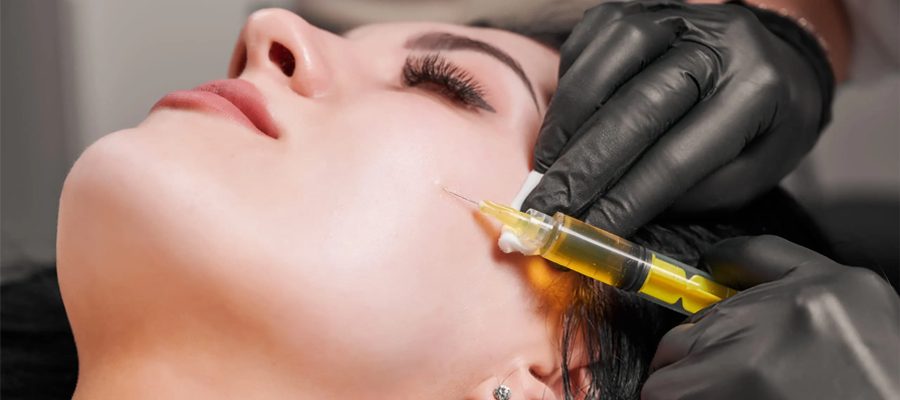
It is a natural and regenerative treatment method applied by re-injecting a rich plasma obtained from your own blood into the areas where the body needs it. This application, which stands for “Platelet Rich Plasma”, is based on the principle of using the healing power of platelets, which are responsible for blood clotting, in areas such as skin, hair, and joints.
It is considered quite safe because it works with a material that is taken directly from the body and given back to the body. It has a wide range of applications from aesthetics to orthopedics because it accelerates the regeneration and repair process. It has attracted great attention in recent years because it offers a non-surgical, natural treatment alternative.
How is PRP Treatment Applied?
In the first step, a small amount of blood is taken from the patient. This blood is centrifuged at high speed in a special device to separate the plasma and blood cells. The plasma portion obtained, that is, the part rich in platelets, is injected into the area to be treated with thin needles.
Local anesthetic cream is usually used during the application so that the patient does not feel discomfort during the procedure. The application time varies between approximately 30-45 minutes. The person can return to their social life immediately after the procedure. PRP is usually applied in several sessions planned at 2-4 week intervals.
How Does Stem Cell Logic Work in PRP Treatment?
Platelets not only perform the clotting function; they are also rich in growth factors. These substances trigger the repair of damaged tissues in the body and cell renewal. When applied under the skin, existing cells are regenerated; when used on the scalp, it contributes to the revitalization of hair follicles.
In the classical sense, stem cells are not given from outside, but the body’s own regeneration potential is activated. For this reason, the process is also considered a natural stem cell stimulation. In particular, the reactivation of damaged, aged or weakened cells is based on this logic.
In Which Areas Is PRP Used? (Skin, Hair, Joints, Face)
It is one of the most frequently preferred methods in skin rejuvenation applications. It is used in many areas such as alleviating fine wrinkles, equalizing skin tone and increasing elasticity. It provides effective results in areas such as the neck, décolleté and the back of the hands, as well as the face.
Successful results are achieved in the treatment of hair loss, especially in male pattern hair loss. It supports the growth of stronger and healthier hair by nourishing the hair roots. In joint diseases, it can be applied to reduce pain and movement restrictions in areas such as knees, shoulders and hips.
It can also be used as a supplement in facial applications to accelerate healing after laser procedures or peeling. Having a wide range of uses in both aesthetic and medical fields makes the treatment versatile.
How Effective is PRP Treatment Against Hair Loss?
For many people struggling with hair loss, this method stands out with both its naturalness and clinical effects. The application supports the re-strengthening of weakened follicles by directly providing the growth factors needed by the hair roots. In this way, the rate of hair loss of existing hair is slowed down and new hair formation is encouraged.
When treatment is started, it can be observed that the shedding decreases within a few weeks, the hair strands become thicker and the scalp looks healthier. Effective results can be obtained on many hair types, including genetic hair loss. The success rate is quite high, especially in cases where early intervention is made.
Treatment of Blemishes, Acne and Fine Wrinkles with PRP
Thanks to its skin renewing effect, it is used not only in the fight against wrinkles but also against blemishes and acne scars. As it increases cell renewal, it reduces skin tone differences, lightens the appearance of blemishes and contributes to the fading of post-acne scars. It also strengthens skin texture by increasing collagen production.
It provides a younger and smoother appearance in areas with fine lines such as the eye area, forehead and lip corners. With regular applications on acne-prone skin, pores are tightened and sebum balance is provided, reducing the formation of new acne. In this respect, it offers both an aesthetic and therapeutic effect.
How Many PRP Treatment Sessions Should Be Applied?
In order to see the ideal effect, a course of 3 to 6 sessions is generally recommended. Sessions are planned at 2-4 week intervals depending on the person’s needs and the area to be treated. Although visible changes begin after the first 1-2 sessions, it is important to complete the process for permanent results.
When applied for different purposes such as hair loss, skin rejuvenation or spot treatment, the number of sessions is customized accordingly. After the treatment is completed, the obtained appearance can be maintained with 1-2 support sessions per year. The frequency of application is determined by the specialist depending on factors such as age, lifestyle and skin type.
Are There Any Side Effects of PRP Treatment?
Since the person’s own blood is used, the risk of allergy is quite low. However, as with every procedure, some temporary side effects may be seen in this application. Effects such as redness, slight swelling or bruising may be experienced in the application area, but these conditions usually disappear on their own within 1-2 days.
People with very sensitive skin may experience slight itching or edema. Although the risk of infection after the procedure is very low, it is very important that the procedure is performed by expert hands in a sterile environment. Side effects are minimal and generally do not affect the person’s social life.
What are the differences between PRP and Mesotherapy?
Although both methods are used for purposes such as skin renewal and hair loss prevention, they differ from each other in terms of content and mechanism of action. While special mixtures such as vitamins, minerals and amino acids prepared externally are injected under the skin in mesotherapy, plasma obtained from the patient’s own blood is used in PRP.
While mesotherapy stimulates cells with nutritious ingredients, PRP activates the person’s own healing cells. There may be differences in terms of application frequency, targeted effect duration and permanence of results. Although there are cases where both methods are effective alone, in some cases it is possible to achieve stronger results by combining them.
Things to Consider After PRP Treatment
After the procedure, temporary redness, mild swelling or sensitivity may occur on the skin. In order for these effects to pass quickly, the skin should be kept clean for the first 24 hours, make-up should not be applied and contact with extremely hot water should be avoided. Similarly, direct exposure to the sun should be avoided and high factor sunscreen should be preferred.
The skin may be more exposed to external factors for a few days. During this period, it is recommended to stay away from products containing high levels of acid, peelings and steam baths. Drinking plenty of water helps the skin recover after the procedure. The care products recommended by the specialist should be used regularly and follow-up sessions should not be skipped.
How Long Does PRP Application Last?
The procedure takes approximately 30 to 45 minutes to complete. The first part of this time is spent collecting blood and centrifuging it. After the blood is separated, platelet-rich plasma is prepared and then injected into the targeted area.
The duration may vary slightly depending on the size and area of the application. The duration of the procedure is planned accordingly in different areas such as the face, hair or joints. It is a very practical application that does not interrupt social life with the preparation process.
What Kind of Changes Occur in the Skin After PRP Treatment?
In the first days, the skin feels slightly tight and lively. Generally, from the second week onwards, the brightness increases, tone begins to even out and pores start to tighten. As the process progresses, skin texture renews, fine lines soften and a general rejuvenation effect occurs.
The skin becomes healthier, tighter and brighter over time. At the same time, its resistance to external factors increases. In order for these changes to become permanent, it is important to complete the treatment process and not to interrupt the recommended care routines. The duration of the effect may vary depending on personal factors.
PRP Treatment Permanent? How Often Should It Be Repeated?
The application is a very natural and effective method as it activates the body’s own renewal process. However, this effect is not permanent. While it supports cell renewal, it needs to be repeated at certain intervals as the aging process and environmental factors continue.
Generally, the first application protocol is planned as 3 to 4 sessions. After this cure is completed, the effect obtained can be maintained for a long time with 1 or 2 support sessions per year. When applied for purposes such as hair loss, skin renewal or reduction of spots, the frequency of repetition varies according to personal needs.
Continuing the treatment at intervals recommended by the doctor, depending on skin type, age, lifestyle and the area treated, ensures that the effect becomes more permanent. The efficiency of the procedure can be increased with regular follow-up and personalized care programs.
PRP Treatment Prices 2025
The cost of the application may vary depending on the area where the procedure is performed, the number of sessions, the equipment used and the experience of the specialist performing the application. As of 2025, the general cost increases in the health and aesthetics sector have also been reflected in this treatment.
Prices can be determined based on a single session, or they can be made more advantageous with packages that include multiple sessions. The amount of product needed for different application areas such as hair, skin or joints, and the duration of the procedure are also important factors affecting the total cost.
To get the most accurate price information, an evaluation should be made in a specialist clinic. Personalized planning provides an efficient process in terms of budget as well as the success of the application.